The Stigma of Changing Majors
Do you remember when you were asked "what do you want to be when you grow up?" And maybe at the time, you answered: "The President" or something that you had no actual intentions of fulfilling. Or maybe you never did that, and instead, you were signing up for a University Tour and they asked you what major you're pursuing. You might have said Buisness. In both of these situations, you don't know what those jobs intel. You just say something.
Then going into your first couple of years of college or university, you are bombarded with everyone expecting you to fully love and pursue the major you choose at a young age. And if you want to change it, you have to fight your way through the system.
Luckily, there is a large percentage of students who change their major, so you are not alone. According to Niche, "more than 80% of students decide to switch majors, and of those who do not, more than half of graduates would change their majors if they could go back."
However, even though a good chunk of students does change their majors at least once, it is still a struggle to get there. Why? Because there is a deeply integrated stigma that once someone starts something, they need to finish it. That the struggle will be worth it. Yet, is it?
The Interviews of University Students
From Creative Writting to Communication Studies
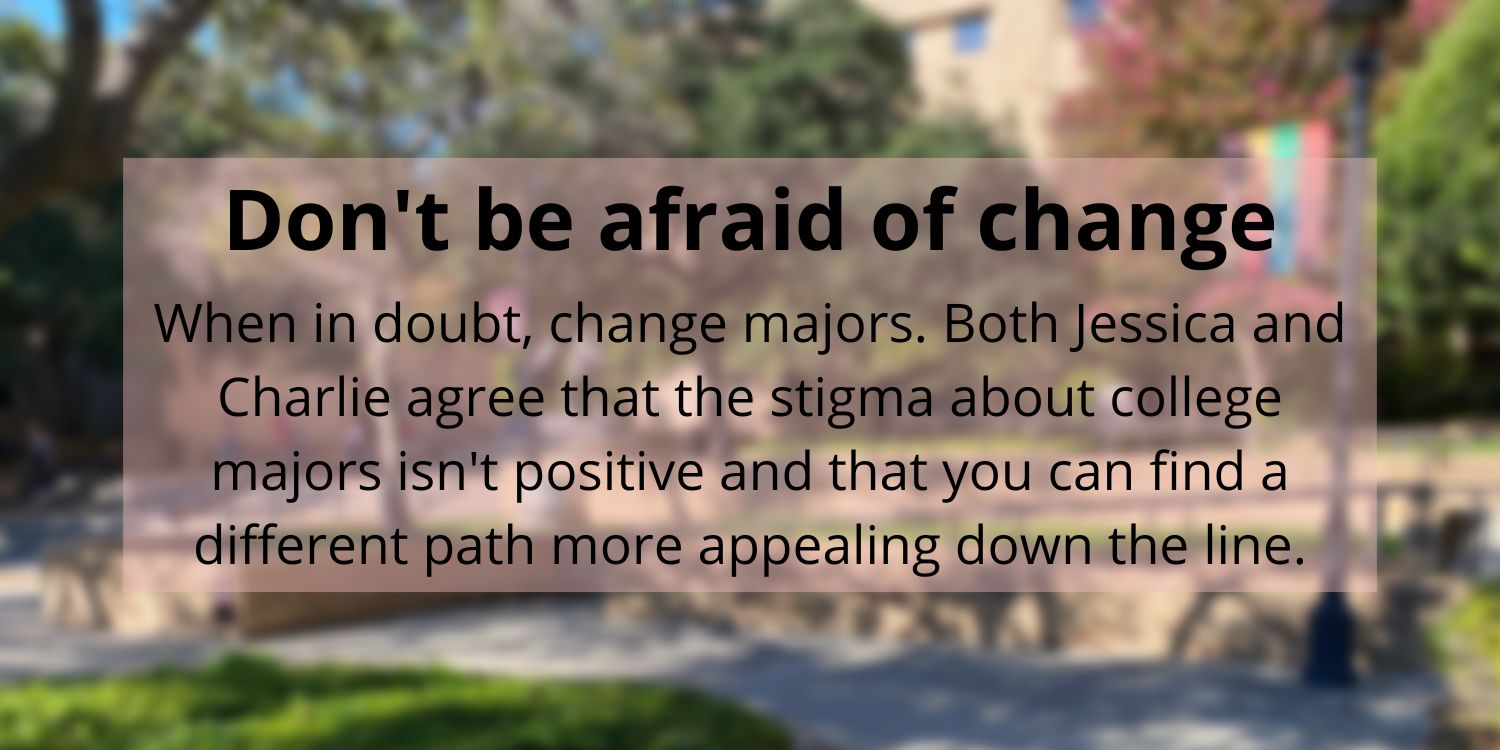
Jessica Benidof was a previous English Creative Writing Major that changed to Communication Studies with a focus on Organisational Communication. She confided in me that this change was a fight, with her choosing to make her minor into her major due to her loss of passion for English. This change came with a lot of uphill fighting regarding her previous departments. She said that she had to "talk to not one, but 2 different advisors" and even then they still wouldn't allow her to change majors. She ended up in her second to last semester as a Senior reaching out to the Communications department for an advisor over there. Because of these struggles, she is highly against the stigma of changing majors, and as a result of changing majors she has not only rejuvenated her love for communications and college after dealing with the pandemic, but she also will be graduating this upcoming December.
From Veterinary Science to Human Sciences
Charlie St.Grady was a previous Veterinary Science major who switched to Human Sciences with a focus on becoming a Perfusionist. When chatting, Charlie confided in me that his main reason for switching career paths from a Veterinarian was the demand for more Perfusionists. This change comes after he has been studying Veterinary Science since the age of 12, and has only recently changed paths with the passing of his dog during the pandemic showed him that he didn't have the heart to deal with Animals at that level the way he thought he did. He is also strongly against the stigma, stating that "nobody knows exactly how life is going to go" and that we as people have to adapt to this new world. After this part of his University life, he will transfer out of Texas State to pursue his medical certificate.
Our Major Tips
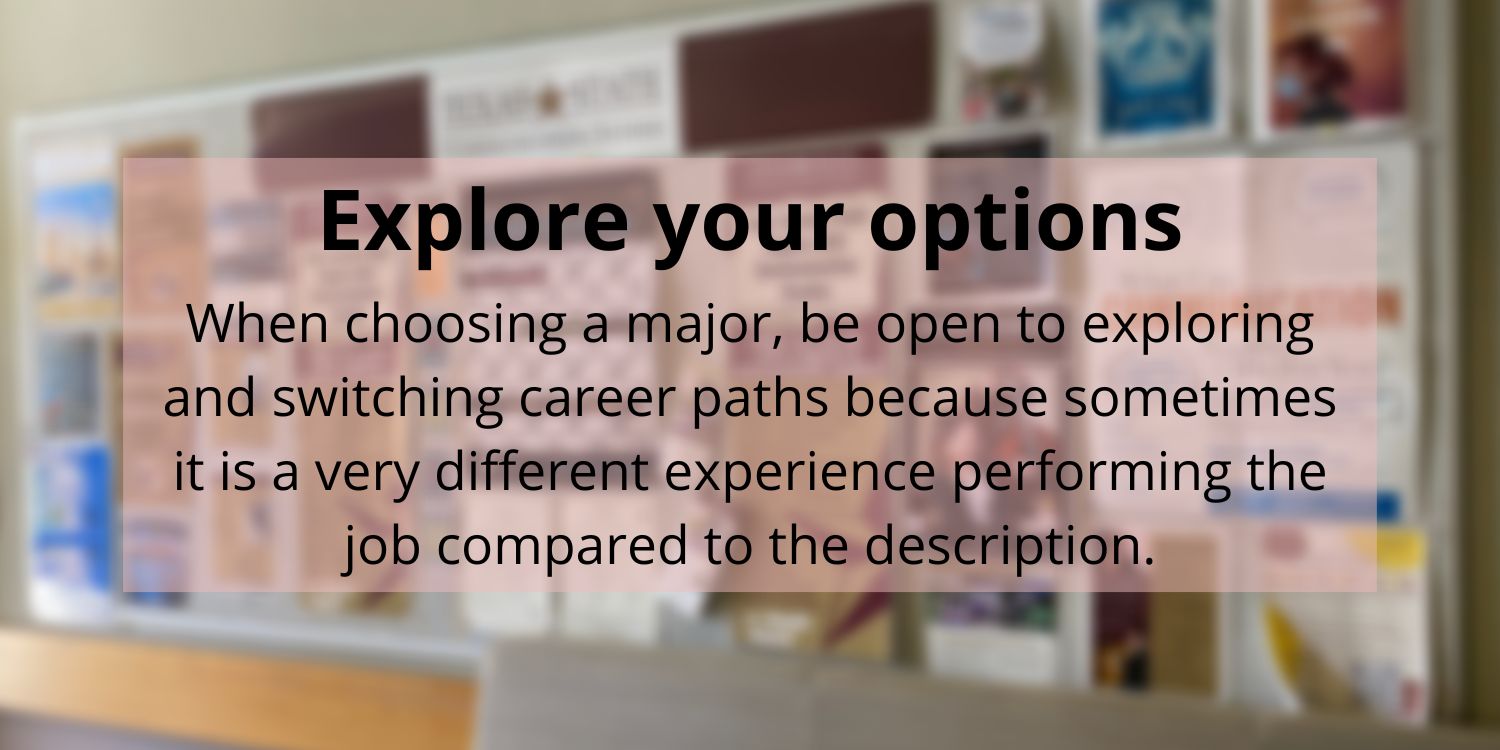
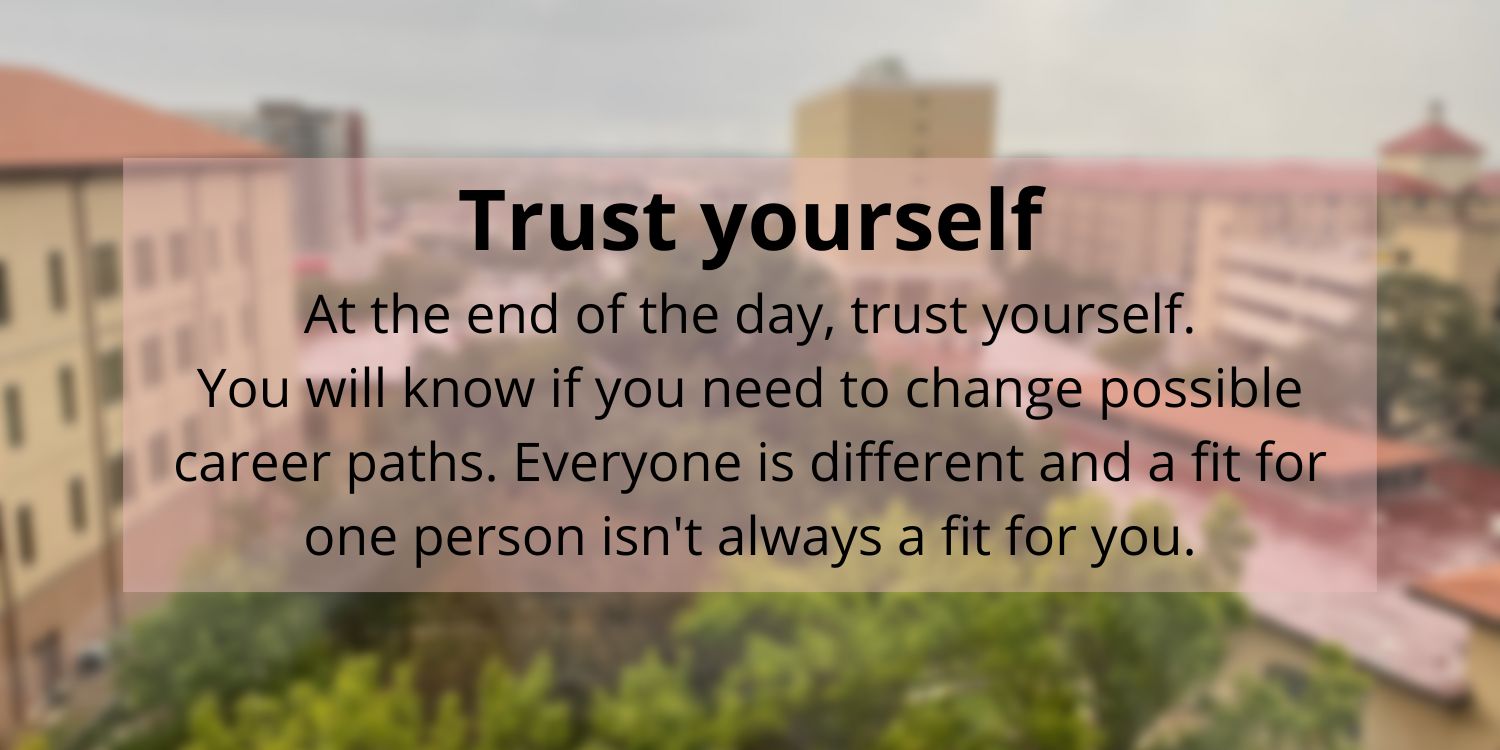
After talking to both Jessica and Charlie we complied together a few good tips and tricks if you're lost on choosing a major and how to go about changing majors.

Final Thoughts
With those statements in mind, I inquire you to think of what your major is to you. Is it something you're required to do, or something you have found interest and passion in? Either way, it is okay because as both Jessica and Charlie have encouraged it's okay to change majors. Go against the grain and fight the stigma of others. Do what makes you the happiest.
If you're still not sure what to do, you can always take a quiz to help guide you down a possible career path. Or even better yet, you can reach out to your local school advisors and ask them questions about career paths.